
Native Plant Requirements
What is a Native Plant?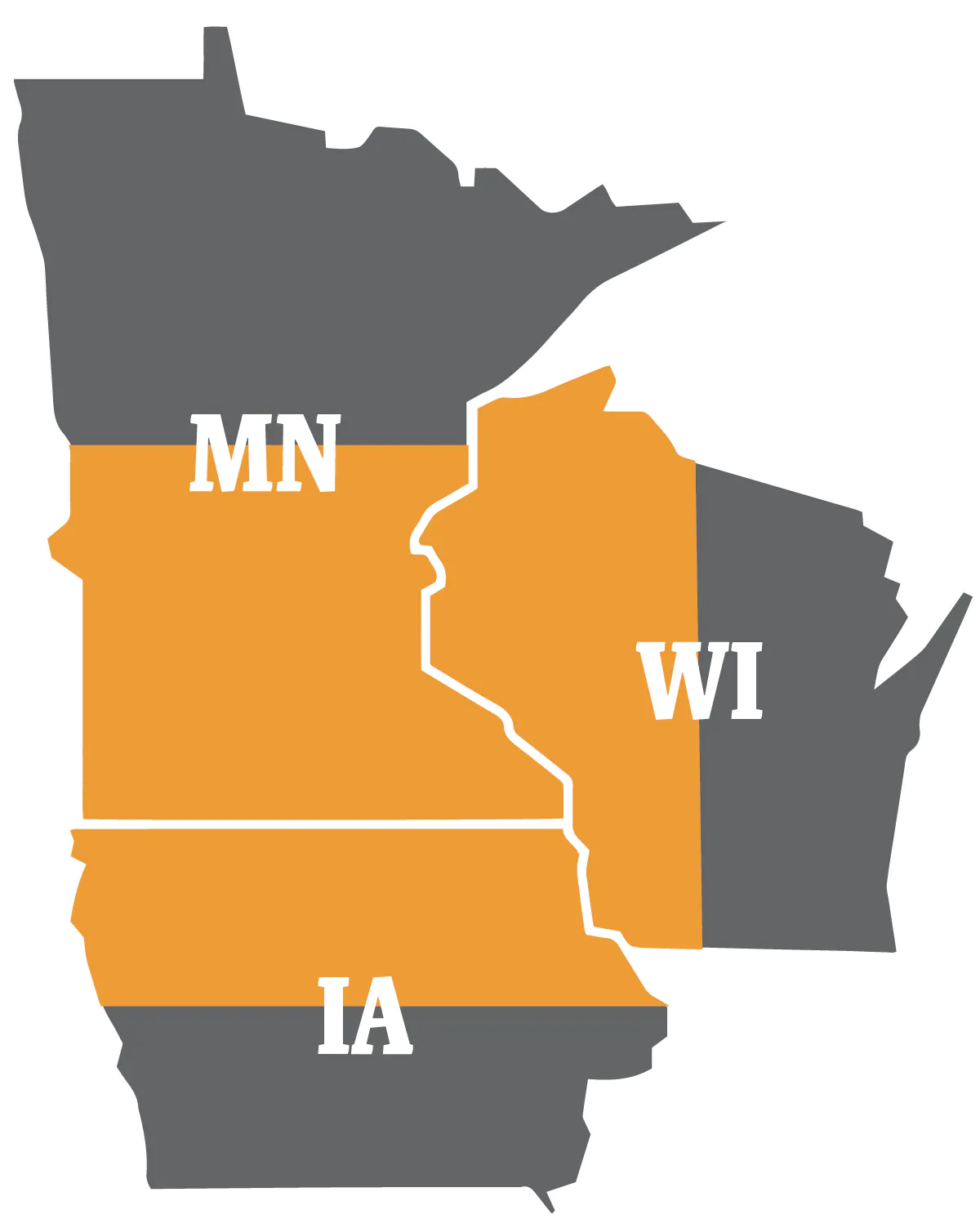
How RPBCWD defines native plants for its Stewardship Cost Share Program
Native plants are plants that are native to AND grown within the lower half of Minnesota, upper half of Iowa, and/or western half of Wisconsin. Native plants must be in their natural, wild form. Cultivars (cultivated varieties) of native plants are not permitted.
For a list of recommended plants, check out our list of Favorite Native Plants for Suburban Yards.
Visit the Minnesota Wildflowers website ⬈, an online field guide to flora of Minnesota, to help determine if a plant is native to Minnesota. There are multiple companies in the Twin Cities Metro that specialize in native plants and offer pre-selected combinations of native plants to meet your needs. Check out the resources section at the bottom of this page!
Native Plant Requirements for Standard Cost Share Projects
Some Stewardship Cost Share projects (habitat restoration, shoreline restoration, waterbody buffer, and native plant projects) require the use of native plants. These projects must meet the below requirements. We have experts on staff who can help with plant selection!
- Wild form: Native plants must be in their wild form. No cultivars (cultivated varieties) are allowed. Learn tips for selecting native plants in our Grow Wild handout.
- Approved source: Native plants must be purchased from a reliable native plant grower/vendor. See the "Resources" section at the bottom of the Stewardship Grant webpage for a list of potential vendors.
- Appropriate selection: Plant selection must be appropriate for site conditions. In other words, evaluate your site’s sun exposure and soil conditions and pick plants that will do well there. Avoid purchasing plants that have been container-grown for more than a couple of years – these plants are usually less healthy. Smaller plants are also more cost-effective!
- Ecologically friendly maintenance: You must use ecologically friendly maintenance techniques. This means limiting chemicals and leaving plant material in place. See “Ecologically Friendly Maintenance” below for details.
Diversity & Quantity Minimums
To support pollinators, restoration projects require at least nine (9) different species with three (3) different blooming native plant species per bloom season (spring, summer, and fall). Mini-Cost Share native plant projects are encouraged to have native plant diversity but are exempt from the minimum diversity minimum requirement.
Required Information for Native Plant List — Standard Cost Share Project
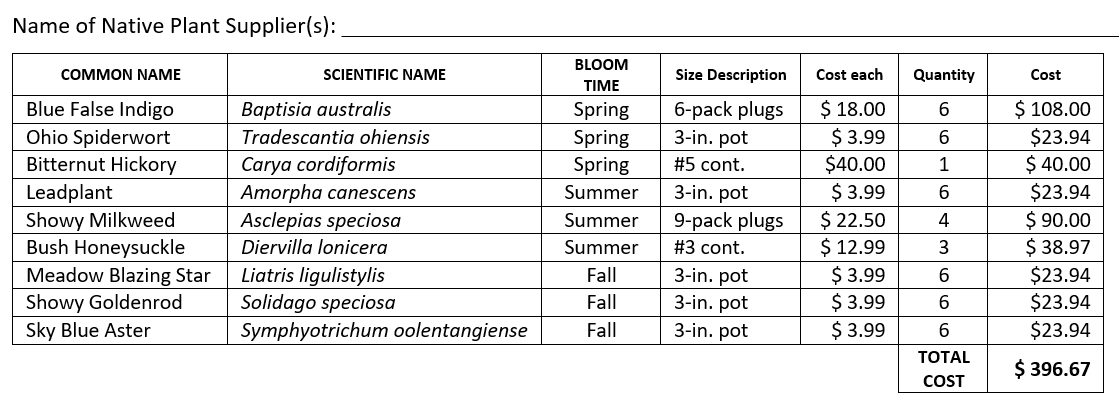
Projects that require native plants (native garden, restoration, and buffer projects) need to provide detailed native plant information. At minimum, the native plant list you submit with your grant application should include the following:
- Native plant source/supplier/vendor - We want to make sure the native plant source you're using is reputable. Check out this list of Minnesota/Wisconsin native plant nurseries and contractors ⬈from Wild Ones - Prairie Edge Chapter.
- Scientific plant name - This is the Latin name including genus and species. For example, Asclepias tuberosa is the scientific name for Butterfly Milkweed. However, some people may call it by another common name such as Butterfly Weed or Orange Milkweed, which is why we want the scientific name.
- Quantity proposed for each species - Are you proposing to plant one or six of an individual species? We realize availability of your proposed list may vary, but don't worry -- we'll allow substitutions and quantity adjustments if you ask us.
- Season of bloom - So the habitat value of your project is maximized, we require at least three different blooming species for spring, summer, and fall. Native plant nursery websites, catalogs, or plant labels will include bloom time. You can also look up plants on Minnesota Wildflowers ⬈. This requirement may be waived for a native seed mix designed for pollinators by a trusted native plant supplier.
- Purchase descriptions
- Size description such as pot size, multi-pack number, or seed weight.
- Price per container (individual pot, multi-pack, seed packet, etc.)
- Quantity you plan to purchase of each live plant species, or weight for seeds.
- Total price for each plant species.
Example Native Plant List
Check out these examples to help you plan your project:
- Information needed in a native plant list
- Example of native plant list from a project
- Native plant list spreadsheet template (Excel) - can be opened/edited in Google Sheets
Ecologically Friendly Maintenance
Native plants provide the most benefit when they are given a chance to thrive within a natural, healthy ecosystem.
- Do not use fungicides or insecticides. These kill "good" and "bad" fungi and insects.
- Limit herbicide use to invasive weed control and carefully follow label directions.
- Plan to pull or otherwise control weeds at least three times during the growing season. This reduces competition with native plants.
- Limit fertilizer use to those without harmful salts. Natural fertilizers such as top-dressing with compost or compost tea are preferred. Native plants usually do not need ANY fertilizer. Alternative (bee) lawns: Clover and other legumes fix nitrogen in soil so fertilizer isn't needed.
- Limit watering to the plant establishment phase (usually the first couple of years) or during extended extreme drought.
- Select appropriate weather conditions for proper planting and seeding.
- Provide soft landings (native plants, leaf litter, and plant debris) under trees. Soft landings ⬈ support overwintering and pupating insects, which serve an important role in nature including serving as food sources for songbirds.
- Practice "messy" gardening. Dead standing plants and fallen leaves provide winter and early spring shelter for beneficial insects, birds, and soil microbes. Leave flower stems no shorter than 18 inches. Even better, don't cut off spent flowers as they provide food for birds year-round.
Download our Ecologically Friendly Maintenance handout!
Frequently Asked Questions
Why don’t you allow cultivars of native plants?
Cultivars are bred to enhance human-desired traits such as shape, size, and color. A native cultivar (sometimes called a “nativar”) may be modified enough so that it no longer provides the same ecological benefits as the wild form of the native plant. Even minor changes in a native cultivar may cause pollinators such as butterflies and bees to no longer recognize it or to be unable to access its nectar or pollen. Cultivars also have less genetic diversity and if they escape into natural areas can negatively impact wild populations of that species.
How do I tell if a native plant is a cultivar?
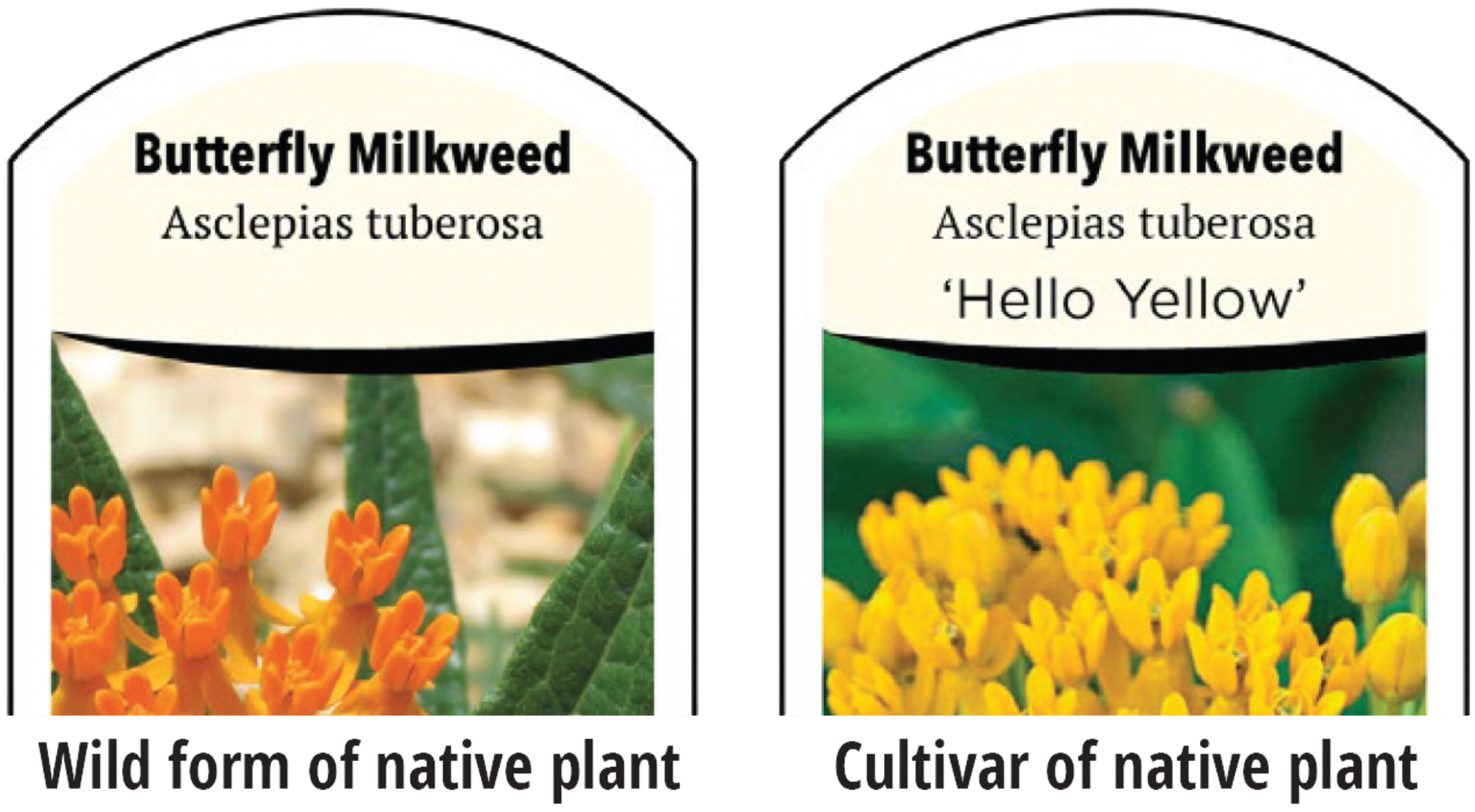
When shopping for native plants, avoid plants that have a variety name which is typically written inside single quotes. The examples on the right show the tops of plant tags for Butterfly Milkweed. The straight or wild form of milkweed does not have a variety name on the tag, whereas the cultivar has the variety name ‘Hello Yellow.’ If you shop with a nursery that specializes in native plants, they will likely not have cultivars.
Why is plant diversity important for my project?
Native plants help protect water quality and also provide habitat for wildlife. More plant diversity results in better habitat quality in the form of food, shelter, and places to raise young. Pollinators that rely on nectar and pollen are especially vulnerable to low plant diversity. This is why we ask that most Standard Cost Share projects that use native plats have a minimum of 9 different species and that bloom times are distributed spring through fall.
Why do you encourage “messy gardening?”
When plants shed their leaves in autumn, the leaves fall on the ground and form a layer of leaf litter. This serves as a natural mulch that conserves soil moisture, provides homes and nest materials for wildlife, and enriches the soil through decomposition. Caterpillars, bumblebee queens, and other insects also rely on leaf litter to overwinter until late spring.
