

Mini Cost Share Project Report

The goal of the RPBCWD Mini-Cost Share Program is to increase the diversity of native plants in residential areas. The majority of your Mini-Cost Share award should go towards the purchase of native plants. Native plants include all forms such as wildflowers, grasses, sedges, trees, and shrubs. Additional components may be eligible for reimbursement if they are deemed necessary for project success. If you are unsure if an item is eligible, contact the grant coordinator.
Eligible components include live native plants (potted, bare root, tuber, etc.), native plant seeds, temporary fencing to protect plants from herbivores, natural mulch* for soil protection or moisture conservation, edging, and other items or materials essential to project success. Items that are not native plants or seeds can make up a max of 25% of your cost share reimbursement.
Ineligible components include decorative elements, irrigation supplies, landscaping fabric, in-kind labor or materials, and vehicle mileage/fuel.
At least 75 percent of the reimbursable cost of a project must go toward the purchase of live native plants and seeds.
*A Word about Mulch: Adding mulch to a native planting may be useful in the first year to reduce erosion, deter weeds, and hold soil moisture. However, make sure to use a natural mulch such as non-dyed wood mulch or leaf litter, as dyes may harm plant and soil health. Mulching plants once should be enough because the plants will produce their own mulch as they drop leaves at the end of the growing season.
Below are spreadsheets for both the Native Plant Project (max $500) and Native Plant Project - Shoreland Health (max $1,500). You can use the corresponding spreadsheet to track purchases and calculate your estimated award for your project type.
Why don’t you allow cultivars of native plants?
Cultivars are bred to enhance human-desired traits such as shape, size, and color. A native cultivar (sometimes called a “nativar”) may be modified enough so that it no longer provides the same ecological benefits as the wild form of the native plant. Even minor changes in a native cultivar may cause pollinators such as butterflies and bees to no longer recognize it or to be unable to access its nectar or pollen. Cultivars also have less genetic diversity and if they escape into natural areas can negatively impact wild populations of that species.
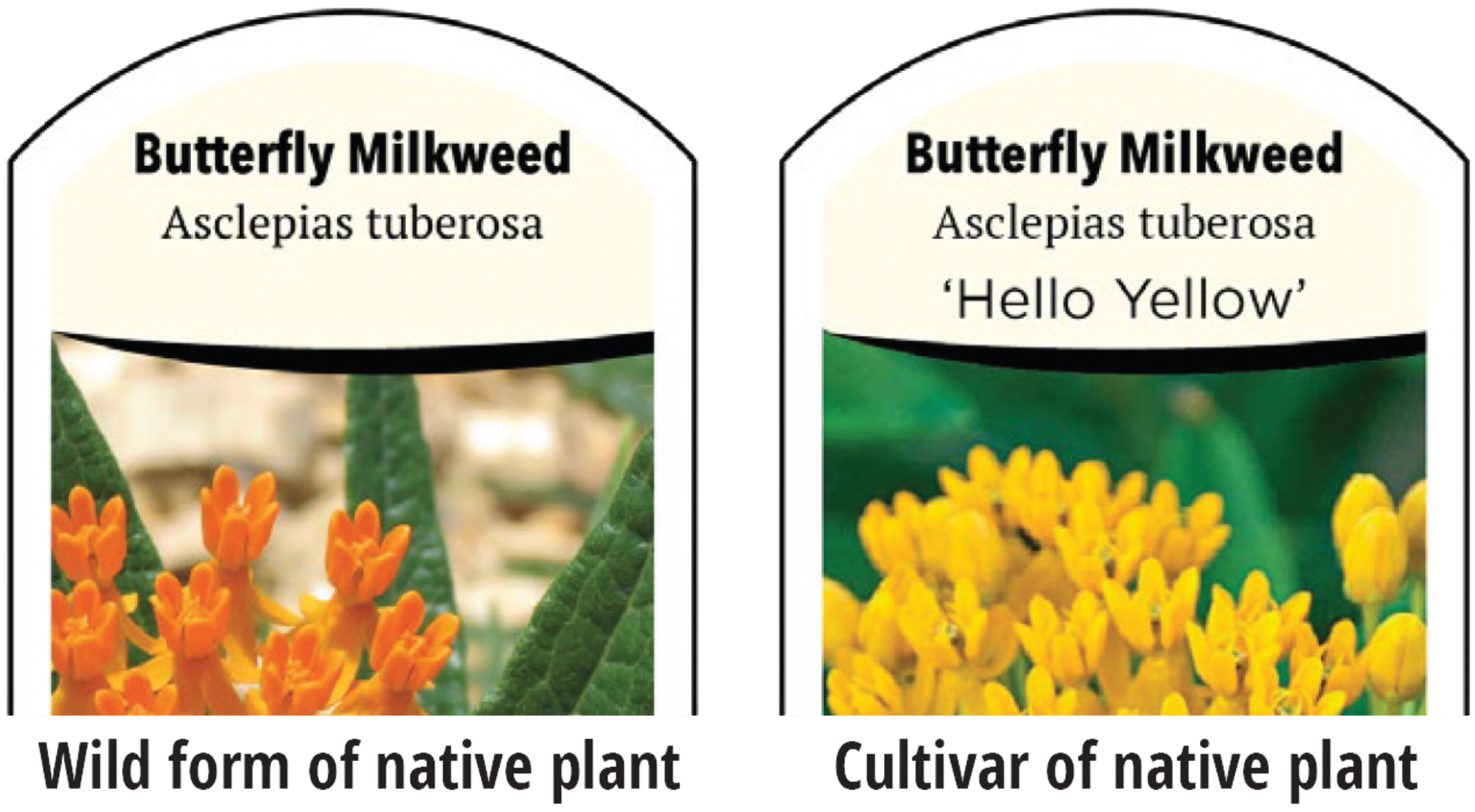
How do I tell if a native plant is a cultivar?
When shopping for native plants, avoid plants that have a variety name which is typically written inside single quotes. The examples on the right show the tops of plant tags for Butterfly Milkweed. The straight or wild form of milkweed does not have a variety name on the tag, whereas the cultivar has the variety name ‘Hello Yellow.’ If you shop with a nursery that specializes in native plants, they will likely not have cultivars.
Why is plant diversity important for my project?
Native plants help protect water quality and also provide habitat for wildlife. More plant diversity results in better habitat quality in the form of food, shelter, and places to raise young. Pollinators that rely on nectar and pollen are especially vulnerable to low plant diversity. This is why we encourage you to select a variety of different species with bloom times distributed throughout the year (spring, summer, and fall). A good goal is to have at least 3 blooming species in each season.
Why do you encourage “messy gardening?”
When plants shed their leaves in autumn, the leaves fall on the ground and form a layer of leaf litter. This serves as a natural mulch that conserves soil moisture, provides homes and nest materials for wildlife, and enriches the soil through decomposition. Caterpillars, bumblebee queens, and other insects also rely on leaf litter to overwinter until late spring.
Reimbursement of your mini-cost share award occurs after you've submitted your project report below, including all photos and receipts. The program coordinator will email you directly to follow up about your reimbursement status. Reimbursement requests are due by November 30th of your application year.
The timing of your reimbursement will depend upon when in the district's financial cycle you submit your close-out report. In most cases, checks will be issued within 45 days after the program coordinator submits your completed application materials for reimbursement. You will receive an email from BILL.com with more information on payments once your close-out report has been processed.
Native Plant Rules:
Ecologically Friendly Maintenance:
Local Regulations:
Acknowledgment:
Maintenance Commitment:
Reimbursement Request: